Truth

“Perhaps the truth depends on a walk around a lake.”
—Poet Wallace Stevens
Good Morning Readers,
I love the above line, which is from Wallace Stevens’ “Notes toward a Supreme Fiction.” Stevens spent most of his life working as an executive for an insurance company in Hartford, Connecticut. He walked two miles from his house to work and often composed poems while he walked. Sometimes he wrote lines on scraps of paper. When he got to work, he gave the notes to his secretary or dictated lines to her.
For Stevens, who was prone to philosophical thinking and whose poems are often abstract, walking grounded him. Walking gave him a direct, sensory experience and physical engagement with the world. Walking clarified his mind. It enlivened it. It got him out of his head and into nature and the physical world, which it does for me too. Movement triggers insights and helps me be creative.
In essence, “Perhaps the truth depends on a walk around a lake” champions the idea that reality and truth are discovered through embodied movement and sensory participation, not just intellectual pondering. It also champions the idea that there are multiple perspectives to everything. As one walks “around the lake,” one sees it from different angles, different perspectives, perhaps 360 degrees of perspectives. Looking at something from one angle, a single perspective is only part of the truth. There’s always another angle and perspective to consider in pursuit of a fuller picture. If one looks at something from 360 ways, then one may be closer to seeing the whole thing, the whole truth, which may be difficult, if not impossible, to do. The whole truth may always be elusive.
Here’s a famous poem by Stevens about this theme.
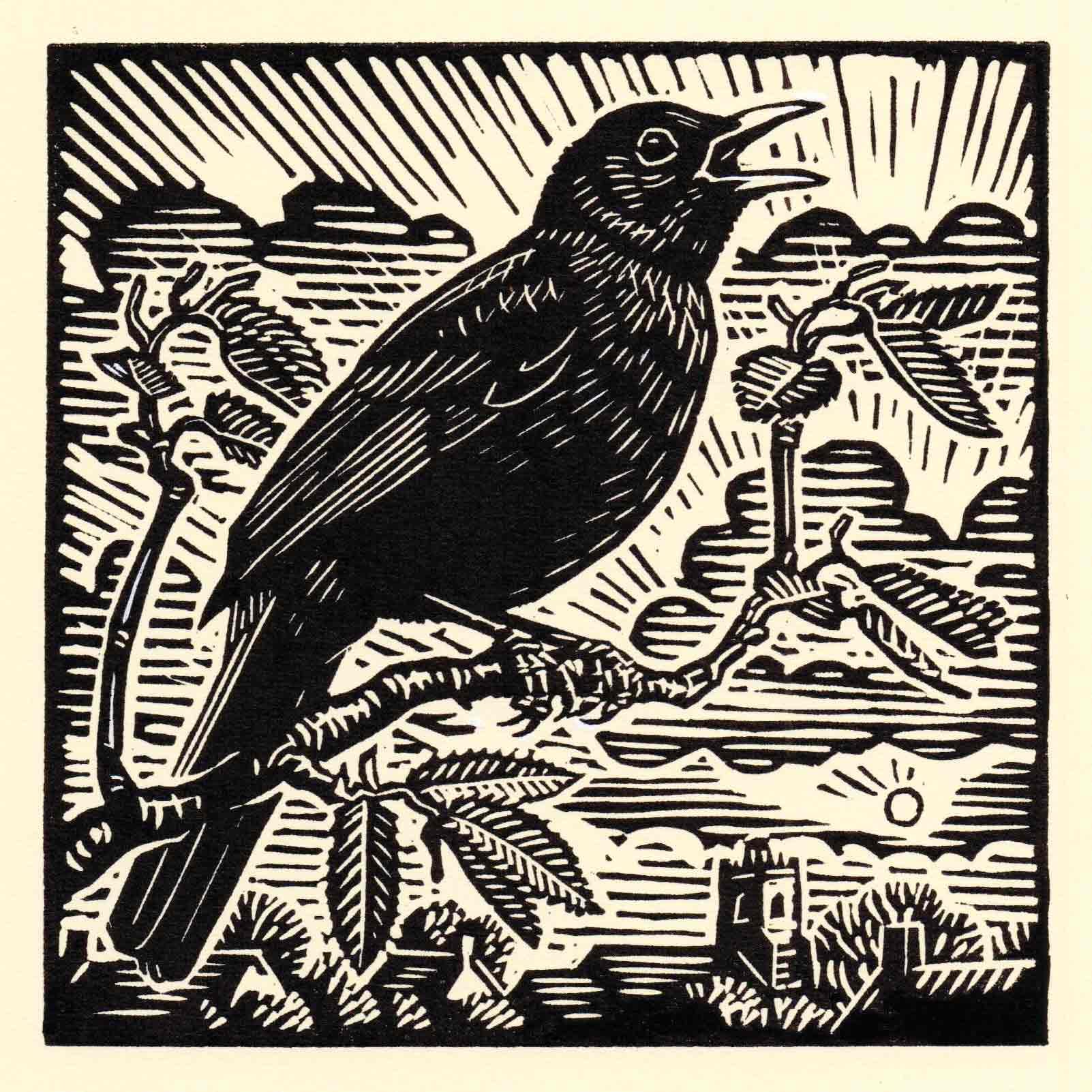
Thirteen Ways of Looking at a Blackbird
I
Among twenty snowy mountains,
The only moving thing
Was the eye of the blackbird.

II
I was of three minds,
Like a tree
In which there are three blackbirds.

III
The blackbird whirled in the autumn winds.
It was a small part of the pantomime.

IV
A man and a woman
Are one.
A man and a woman and a blackbird
Are one.

V
I do not know which to prefer,
The beauty of inflections
Or the beauty of innuendoes,
The blackbird whistling
Or just after.

VI
Icicles filled the long window
With barbaric glass.
The shadow of the blackbird
Crossed it, to and fro.
The mood
Traced in the shadow
An indecipherable cause.

VII
O thin men of Haddam,
Why do you imagine golden birds?
Do you not see how the blackbird
Walks around the feet
Of the women about you?

VIII
I know noble accents
And lucid, inescapable rhythms;
But I know, too,
That the blackbird is involved
In what I know.

IX
When the blackbird flew out of sight,
It marked the edge
Of one of many circles.

X
At the sight of blackbirds
Flying in a green light,
Even the bawds of euphony
Would cry out sharply.

XI
He rode over Connecticut
In a glass coach.
Once, a fear pierced him,
In that he mistook
The shadow of his equipage
For blackbirds.

XII
The river is moving.
The blackbird must be flying.

XIII
It was evening all afternoon.
It was snowing
And it was going to snow.
The blackbird sat
In the cedar-limbs.
Wallace Stevens
Stevens offers us 13 vivid, haiku-like ways of looking at a blackbird. Of course, he could have offered 15, 50, or 360. There are always more perspectives. Each is different from the other. Adding a new perspective changes how we see the others. The ways to see something are endless and only limited by the limits of one’s imagination.
These are my questions for you this week: What do you do to see things from multiple perspectives? What do you gain from seeing things from different angles?
I look forward to hearing your comments.
David